
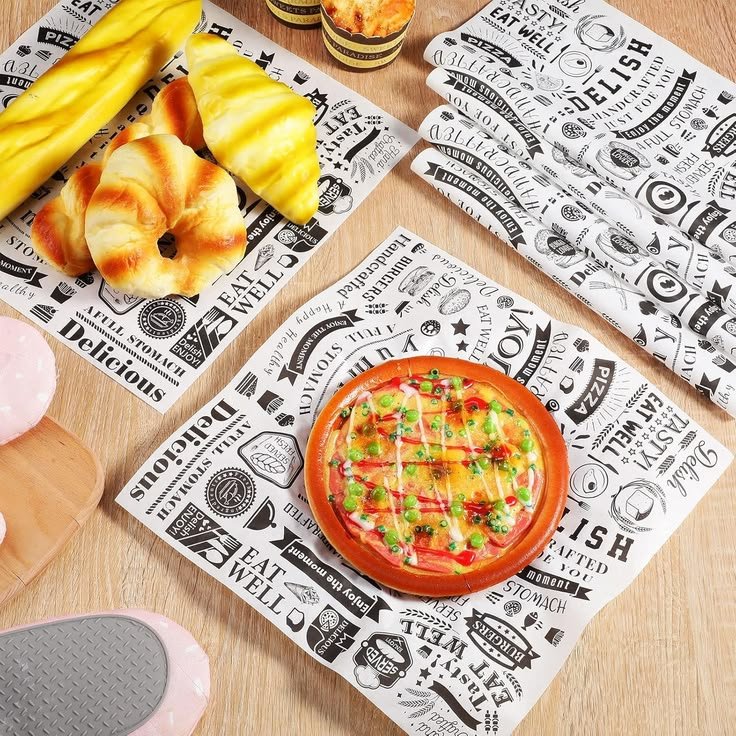
Food service packaging is a constantly developing package that requires a steady quality, branding, and reliability of materials in day-to-day activities. A good number of companies have been relying on custom food paper to ensure that presentation is not compromised when it comes to wrapping, lining, and serving purposes. The packaging systems must have robust material structure, consistent printing performance, and reliable handling properties to aid the large volume food business in restaurants, catering services, and retail settings, wherein uniformity determines the perception and operational effectiveness of the services at various service points. Design consistency, print integrity, and material sustainability contribute to the packaging performance, making it reliable during the food preparation, delivery, and service processes without interruption in branding consistency and material structural performance during repeated handling. The following aspects are the current packaging expectations in the competitive food industries worldwide market development.
Print Quality
Food packaging design considerations underline visual consistency and brand presentation in service environments. In competitive markets, marketing teams choose custom printed food paper to enhance product identity and recognition. The packaging processes demand that the design output and the accuracy in the production yield similar results. These service providers take high-quality checks on printed surfaces so that the surface can be read and also be long-lasting in its use. The sustainable packaging processes rely on the stability of print performance, material compatibility, and accurate color reproduction in the various food service applications that demand reliable output quality control systems that ensure consistent brand usage across the channels of distribution without production variation problems and standards compliance.
Liner Design
The packaging choice in both restaurant and catering is affected by food safety requirements. The expectations of handling the smooth surfaces and resistance to grease propel the acceptance of the custom printed food paper in the service setups. The influence of material layering on absorbency control, texture stability, and serving reliability. Operational needs entail the need to have consistent sizing, heat resistance,ce and handling efficiency in food presentation. Food service branding relies on visual congruency, printed design readability, and material robustness during serving circumstances. Packaging engineers consider the absorption rates, print stability, and structural integrity when choosing liners for high-volume food handling situations in which the service performance in various operational configurations is desired to maintain food service efficiency without compromising material reliability standards in day-to-day operations, workflow processes, and consistency control.
Bag Usage
Food service packaging formats are concerned with packaging convenience and portability. Retail food stores use long-lasting food paper bags to serve take-away and handling of food materials. The strength of the material influences the load capacity, moisture resistance, and safety of handling. Design: The design must consider grip structure, location of print, and balance of structure to be used by the customer. Durability testing, material evaluation, and assessment of handling stress are needed in retail operations in packaging. Food service providers focus on the stability of packaging performance, structural integrity, and print stability of the take-away distribution system, which guarantees a high-quality customer experience across multiple service points and operational requirements that promote packaging consistency across service channels without quality variation in high-volume operations, and flow control system standards control.
Wrap Design
Food packaging systems focus on wrapping effectiveness and product protection in the handling processes. Performance expectations of food paper wrap in service environments are heat resistance and structural flexibility. The composition of materials influences grease resistance, sealing powder,r and clarity of the print. Packaging design involves a packaging that exhibits uniform wrapping and handling performance. The food service applications are based on the stability of material performance, print adhesion, and moisture resistance to ensure the reliability of operations. When developing solutions to meet the needs of food service operations, packaging engineers consider wrapping integrity, heat resistance, and structural consistency to maintain stable performance in a variety of distribution environments and handling conditions that maintain packaging durability in the retail and food service channels without loss of structural stability and standard control in continuous operations flow systems.
Sheet Use
Food service packaging is based on flat material formats of wrapping, lining, and surface protection. Food paper sheets have been employed in bulk preparation processes to have uniform portion handling and presentation. The thickness of materials influences the performance of absorption and structural stability during contact with food. Efficiency in packaging is determined by consistency in sheet sizes and consistency in printing. Preparation environments of foods demand consistent material strength, resistance against grease,e and stability during handling. Packaging processes measure sheet consistency, print quality, ty, and moisture control to maintain the consistency of service performance throughout food handling systems. To maintain consistent food service performance across the full workflow of operations, without impacting material performance standards in daily production systems, flow control measures active monitoring process flow stability.
Print Surface
The food presentation standards demand uniformity of visual manifestation and material dependability in the packaging formats. Printed food paper in service packaging environments and product delivery systems enhances brand communication. The alignment of prints influences the readability, accuracy of design,gn, and surface uniformity. Ink absorption, durability,y and handling performance depend on the material used. The packaging of food service needs print quality to be stable, the coating of material to be consistent, the texture, and the surface structure to be reliable. Packaging engineers determine the durability of prints, color stability, and material compatibility to maintain reliable food packaging production under high-demand service conditions, to ensure that the presentation quality in retail service and catering systems does not vary with changes in results and control quality system, through MS active monitoring of process flow.
Supply Chain
Distribution systems involved in packaging necessitate a steady availability of materials and supply coordination. Food paper wholesale sourcing is a vital ingredient in the continuous packaging business of large-scale food businesses. Supply planning has an impact on inventory stability, timing of orders, and efficiency of production flows. Sourcing materials demands quality assurance, vendor reliability, and delivery reliability. Supply chains in food packaging are dependent on a stable procurement regime, a consistent level of output quality, and effective management of logistics. Custom printed paper distribution networks assess the reliability of the suppliers, material uniformity, and package behavior to ensure service continuity throughout high-demand food processes that guarantee supply flow throughout the operation demand cycles without failure in the delivery systems, controls, and stability of the active process flow.
Conclusion
The consistency of the materials, quality of printing,g and structural reliability of the packaging systems are relied upon in the food service settings. Premier custom food paper promotes branding continuity and effective packaging functionality within restaurant and retail service. The choice of materials has an impact on durability, as well as the safety of handling, and the visual display of various service formats. Food service providers are day-to-day operations that depend on consistent packaging production, consistent supply systems, and consistent material performance. Strong material control, the stability of print alignment,t and reliable structural quality are all needed in the packaging environment to guarantee the efficiency of food handling. In addition, the stability of service delivery through the retail and catering systems is maintained to ensure that no problems of performance variation exist in the control system stability.