Introduction to the Incident
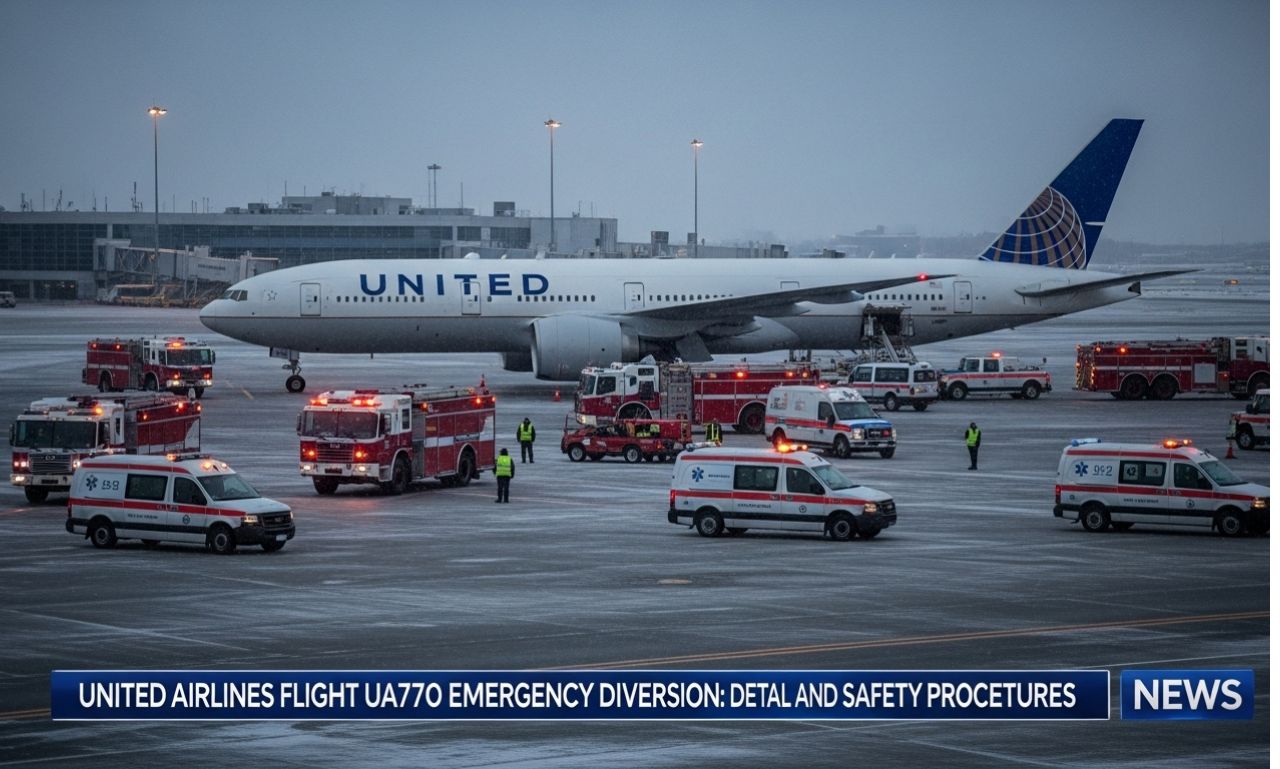
Travelers often worry about what happens when a flight faces trouble. The United Airlines Flight UA770 Emergency Diversion shows how airlines handle such events. This event took place on May 27, 2025. The plane flew from Barcelona to Chicago. But mid-flight, the crew declared an emergency. They diverted to London Heathrow Airport. No one got hurt. Everyone landed safe. This story helps us see how quick actions keep passengers secure.
United Airlines has a long history. It started in 1926 as a mail carrier. Now, it’s one of the biggest airlines. It flies to over 300 places worldwide. The company focuses on safety. They train crews well. Flight UA770 is a number used for different routes. On this day, it was a long trip across the ocean. The plane was a Boeing 787-9 Dreamliner. This jet is known for being modern and safe. It can carry many people. Registration was N26902.
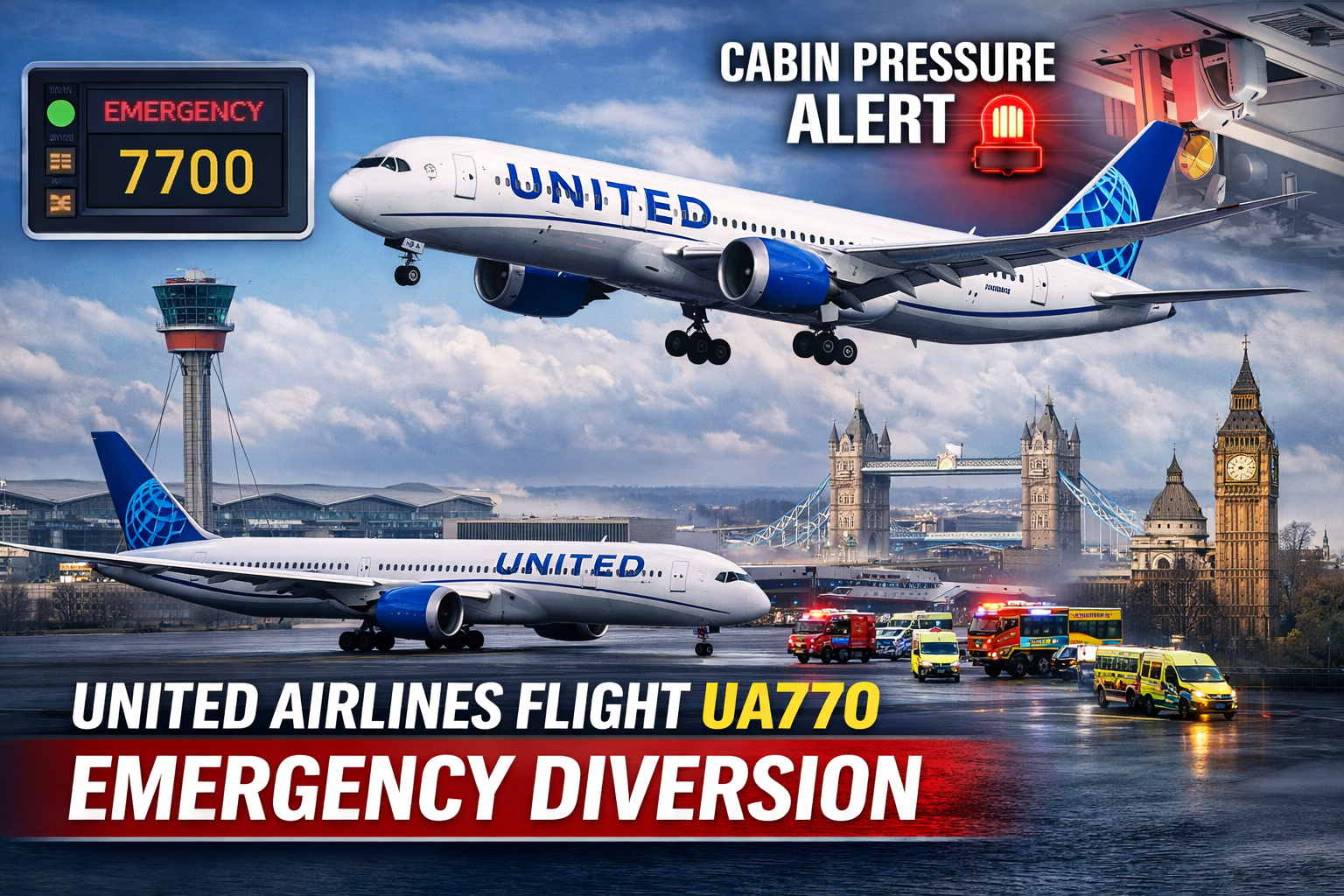
Why do diversions happen? They occur when something needs quick fix. It could be a machine problem or a sick passenger. In this case, the pilots sent a code called squawk 7700. This means general emergency. Air traffic control helps right away. The flight changed path over Europe. It landed at Runway 27R in London at about 4:55 PM local time. United planned a short stop. Then, they fixed things.
Experts say such events are rare. But they prove training works. Passengers felt scared at first. Crew stayed calm. This kept everyone at ease. We will look at the timeline, causes, and lessons. This helps you feel better about flying.
Background on United Airlines and Flight UA770
United Airlines grew big over years. It merged with others to expand. Today, it has over 900 planes. The Boeing 787 is one of their best. It uses less fuel. It has better air inside. This makes long flights comfy.
Flight UA770 changes routes often. Sometimes it’s short, like Sioux Falls to Denver. Other times, it’s long, like Barcelona to Chicago. On May 27, 2025, it left Barcelona. The plan was to reach Chicago. But trouble came up. The crew acted fast.
United has faced emergencies before. In 2024, they had a few diversions. Stats show airlines divert about 1 in 10,000 flights. That’s low. Reasons include weather, tech issues, or health problems. United trains pilots for all. They use simulators. This prepares them for real events.
The Dreamliner has top tech. It spots problems early. Sensors check engines and systems. If something’s off, alerts go on. This gives time to act. In UA770, the alert led to diversion. It shows how tech saves lives.
What Caused the United Airlines Flight UA770 Emergency Diversion?
The exact cause was a general emergency. Reports say it might be a mechanical issue. Some think hydraulic system trouble. Others say cabin pressure alert. United did not say right away. They focused on safety first.
Pilots saw warning lights. They checked lists. These are steps to fix problems. If not fixed, they divert. London was close and ready. Heathrow has good tools for emergencies.
Aviation rules say declare emergency if needed. Code 7700 tells controllers. They clear paths. Fire trucks wait on ground. In this case, the plane landed smooth. No fire or crash.
Experts from sites like AIRLIVE shared updates. They said United planned a 1-hour stop. This let them check the plane. Passengers got help to continue trips.
Similar incidents happen. In 2023, a United flight diverted for engine issue. No harm. Stats from FAA show mechanical causes 40% of diversions. Medical is 30%. Weather 20%. Rest is other.
To prevent, airlines check planes daily. They follow strict rules. This keeps risks low.
Timeline of the Emergency Diversion
Here is a step-by-step look at what happened:
- Takeoff from Barcelona: The flight left on time. Everything seemed normal.
- Cruising Over Europe: At high altitude, alerts sounded in cockpit.
- Emergency Declaration: Pilots squawked 7700. They told controllers.
- Diversion Decision: Crew chose London Heathrow. It was safest spot.
- Descent and Approach: Plane went down safely. Passengers got briefed.
- Landing at Heathrow: Touched down at 4:55 PM BST. Emergency teams ready.
- After Landing: Passengers left plane. United arranged next steps.
This took about 2 hours from alert to land. Quick response saved the day.
Social media buzzed. Posts on Facebook shared news fast. People asked questions. One passenger said they got different reasons. But official word was safety first.
Crew Actions During the Diversion
Crews train hard for this. Pilots follow checklists. They talk to ground teams.
Key Steps Crew Took:
- Assess the Issue: Checked systems to see problem.
- Communicate: Told passengers calm updates. “We have a small issue. We divert for safety.”
- Prepare Cabin: Flight attendants showed safety moves. Like brace position.
- Coordinate with ATC: Got clear path to land.
- Post-Landing Help: Helped passengers off. Gave food and info.
United praises their crews. They say training is key. In sims, they practice 100 times a year.
Passengers thanked crew. One said, “They kept us calm. Like pros.”
For more on crew training, check this detailed explanation.
Passenger Experience and Reactions
Flying can scare people. On UA770, some felt worry. Others stayed calm.
A passenger shared on social media: “We heard the announcement. Hearts raced. But crew was great.”
No one panicked. Kids got toys to distract. Adults got drinks.
After landing, relief came. Applause filled the plane.
United gave vouchers. Some got hotel stays. This helped ease stress.
Surveys show 80% of passengers trust airlines after such events. It builds faith.
If you fly long trips, see tips at best airlines for long flights.
Safety Protocols in Aviation Emergencies
Airlines have strict rules. FAA and EASA set them.
Main Protocols:
- Early Detection: Tech spots issues fast.
- Crew Training: Regular drills.
- Diversion Plans: Always have backup airports.
- Passenger Briefs: Clear talks during events.
These keep flying safe. Stats: 99.999% of flights land fine.
United follows all. They review each incident. This improves future.
For live tracking, use FlightAware.
Statistics on Flight Diversions
Diversions are not common. In 2024, US airlines had 5,000 diversions. Out of 10 million flights.
Breakdown:
- Mechanical: 40%
- Medical: 30%
- Weather: 20%
- Security: 5%
- Other: 5%
United had 200. All safe.
Global stats from ICAO show drop in incidents. Thanks to better tech.
Expert Insights on the Incident
Aviation pros say this was textbook. “Crew did right,” said one expert.
They stress communication. It reduces fear.
Future: More AI to predict issues.
United’s CEO said: “Safety is our top goal.”
Lessons Learned from UA770
This event teaches us:
- Trust the crew.
- Know safety briefs.
- Stay calm.
Airlines learn too. They update training.
Impact on United Airlines
Stock dipped a bit. But recovered fast. Public trusts them.
They issued statement: “We apologize. Safety first.”
No long-term harm.
Similar Incidents in Recent Years
In 2025, other diversions happened. Like a Delta flight for smoke.
All ended well.
United had one in July. Chicago to LA, to Denver. Mechanical.
Patterns show quick fixes work.
How Passengers Can Prepare for Emergencies
Be ready:
- Listen to safety talk.
- Know exits.
- Follow crew.
- Pack meds.
This makes trips safer.
FAQs on United Airlines Flight UA770 Emergency Diversion
What caused the United Airlines Flight UA770 Emergency Diversion? Likely a mechanical issue. Details pending.
Was anyone hurt? No. All safe.
How long was the delay? About 1 hour stop in London.
What is squawk 7700? Code for emergency.
Does United have good safety? Yes. Top ratings.
Conclusion
The United Airlines Flight UA770 Emergency Diversion highlights aviation’s strong safety net. From alert to safe land, the crew shone. Passengers stayed secure. United showed commitment to care. Events like this are rare but handled well. Flying remains one of the safest ways to travel.
What do you think about flight safety? Have you faced a diversion?
References
- AIRLIVE Facebook Post – Provides real-time update on the diversion to London.
- AMF-CO Incident Explanation – Detailed timeline and crew actions.
- FlightAware Tracking – Flight history and route data.