
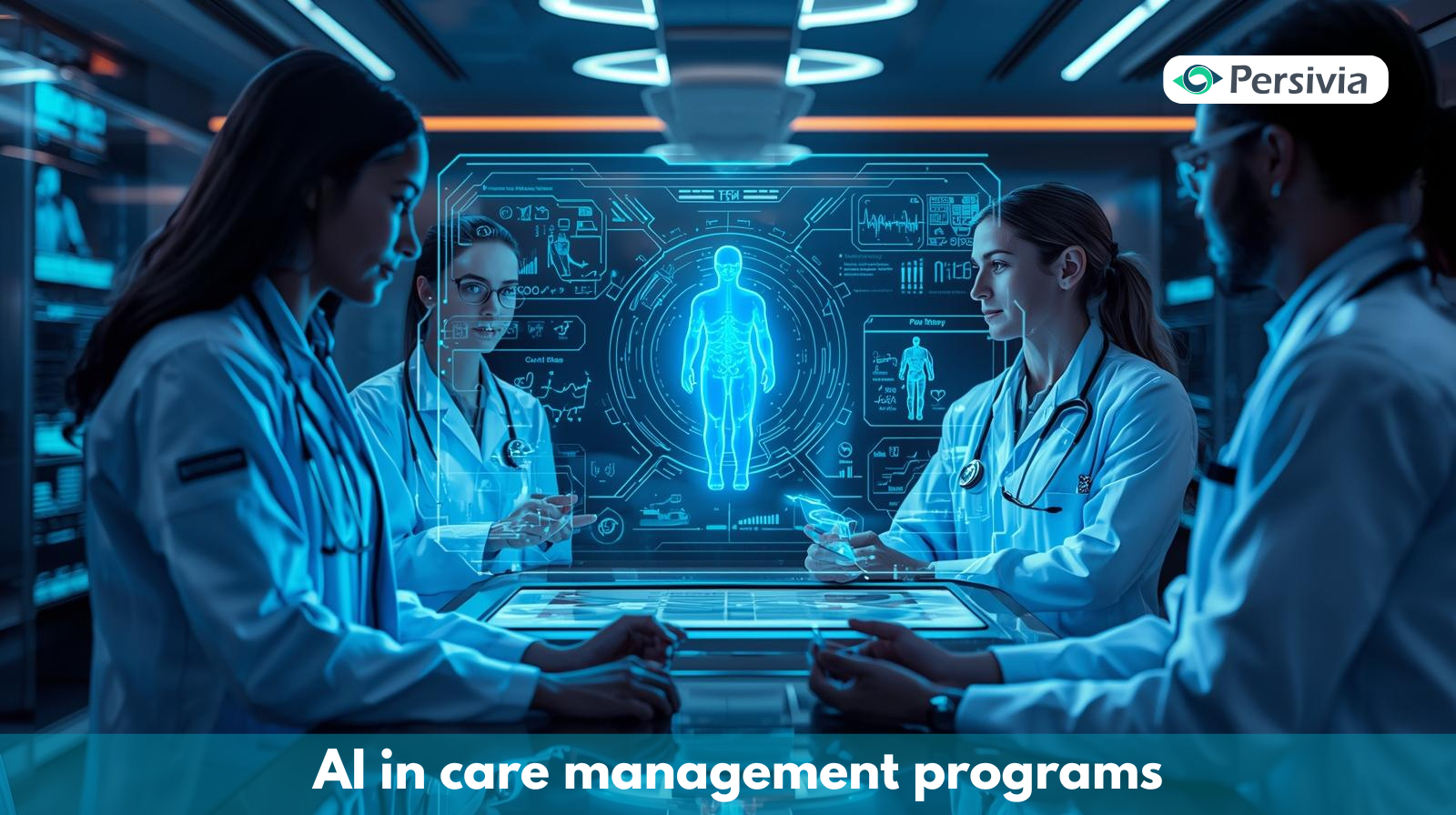
Healthcare practitioners using AI in care management impact patient outcomes, operational costs, and compliance standards. The deployment of AI in care management programs is not a technological enhancement, but a paradigm shift in risk identification, individualization of interventions, and organization of treatment across populations within a team of care providers.
Preparation is the key factor that separates successful AI implementations from failed ones. Providers who understand data requirements, address algorithmic bias, and plan staff adoption achieve measurable improvements in patient engagement and cost efficiency. Individuals who engage in fast deployment without analysing the issue of integration squander resources and initiate workflow disturbances that negatively affect care delivery.
How AI Functions in Care Management Programs
Care management AI uses machine learning on patient data to predict health risks and automate administrative tasks across the care continuum. The technology supports the entire care management process, from patient risk stratification and personalized care planning to outcome tracking.
Primary AI Applications for Providers
- Risk prediction models are used to analyze patient histories to identify people who are at a high risk of hospital readmission or deterioration of a chronic condition. Care managers get priority lists of patients with particular intervention prescriptions.
- The automated care planning creates personalized treatment plans according to clinical guidelines, patient preferences, and past outcomes. The systems adjust recommendations as patient conditions change.
- Administrative automation handles appointment scheduling, prior authorization requests, and documentation review without manual processing.
Expected Benefits of AI in Care Management
AI in Care Management delivers concrete improvements when implemented with proper planning and oversight. Providers see measurable changes in three key areas.
Proactive Patient Monitoring
AI continuously analyzes patient records to detect early warning signs before acute emergencies occur. Care managers use AI insights to deliver preventive interventions rather than reacting to crises. The systems detect the slight pattern variations in vital signs, medication adherence, and care gap closures that are indicative of worsening health conditions.
Personalized Treatment Pathways
AI creates individualized care plans that account for patient health history, medication responses, and social determinants. Care teams receive specific recommendations rather than generic protocols.
Treatment personalization includes:
- Medication regimens adjusted for individual metabolic profiles
- Follow-up schedules based on actual risk levels
- Care coordination customized to family support availability
- Intervention strategies aligned with patient health literacy levels
Workflow Efficiency Gains
AI automates repetitive administrative tasks that consume care manager time. Staff redirects time from paperwork to direct patient interaction and complex care coordination activities.
Risks to Address Before AI Deployment
AI implementation creates vulnerabilities that require specific mitigation strategies before deployment. Three risk categories demand immediate attention.
Data Privacy and Security Vulnerabilities
The use of AI applications exposes access points to unauthorized access to protected health data in several systems. Algorithms that aggregate patient data reveal sensitive health patterns even without individual identifiers.
Security requirements include:
- Encryption protocols for data transmission between AI systems and EHRs
- Access controls limiting staff permissions to the minimum necessary information
- Vendor security audits verifying third-party HIPAA compliance
- Algorithm output reviews preventing inadvertent patient identification
Algorithmic Bias Concerns
The biased recommendations generated with AI models that are trained on non-representative data are detrimental to patient subgroups. In order to prevent disparate impacts, providers should audit the AI training datasets due to demographic representation, track the outputs, and provide clinical supervision of automated recommendations.
Integration and Adoption Barriers
AI solutions that fail to integrate into current workflows pose a work redundancy to the care teams. Staff resistance increases when systems require manual data entry or produce recommendations in incompatible formats.
Planning and Strategy for Successful AI Integration
Effective implementation of AI requires planning in organizational preparedness, regulatory compliance, and change management.
Organizational Readiness Assessment
Assess technical capability and human expertise, and then select the vendor. The key readiness areas are data quality standards, system interoperability, and analytics team expertise.
Assessment questions:
- Do we have standardized data formats across patient information sources?
- Can our IT infrastructure support real-time data processing requirements?
- Do care managers have experience interpreting predictive analytics?
- Is leadership committed to the workflow changes AI requires?
Regulatory Compliance Planning
Applications of AI should comply with FDA regulations of clinical decision support systems, HIPAA data protection regulations, and state privacy laws. The providers must be documented in their processes to validate the accuracy of their algorithms, patient consent, audit trail, and adverse events.
Sustainable Implementation Framework
AI systems must be regularly reviewed and updated. Establish governance processes for algorithm performance, bias detection, and model retraining, including monthly metrics monitoring, quarterly outcome reviews, and annual bias audits.
Persivia CareSpace®: Implementation Made Practical
Persivia CareSpace® addresses implementation challenges through pre-configured clinical programs and automated workflow integration. The digital health platform includes 200+ evidence-based care pathways that deploy without custom development requirements. The platform manages the care management value chain from patient identification through outcome measurement. Soliton AI Engine handles risk stratification, care plan generation, and patient engagement without creating additional manual tasks.
Final Word
Implementing AI in care management programs requires thorough preparation in data infrastructure, regulatory compliance, and staff adoption. Those providers who can respond to these fundamentals attain quantifiable patient outcomes and operational efficiency.